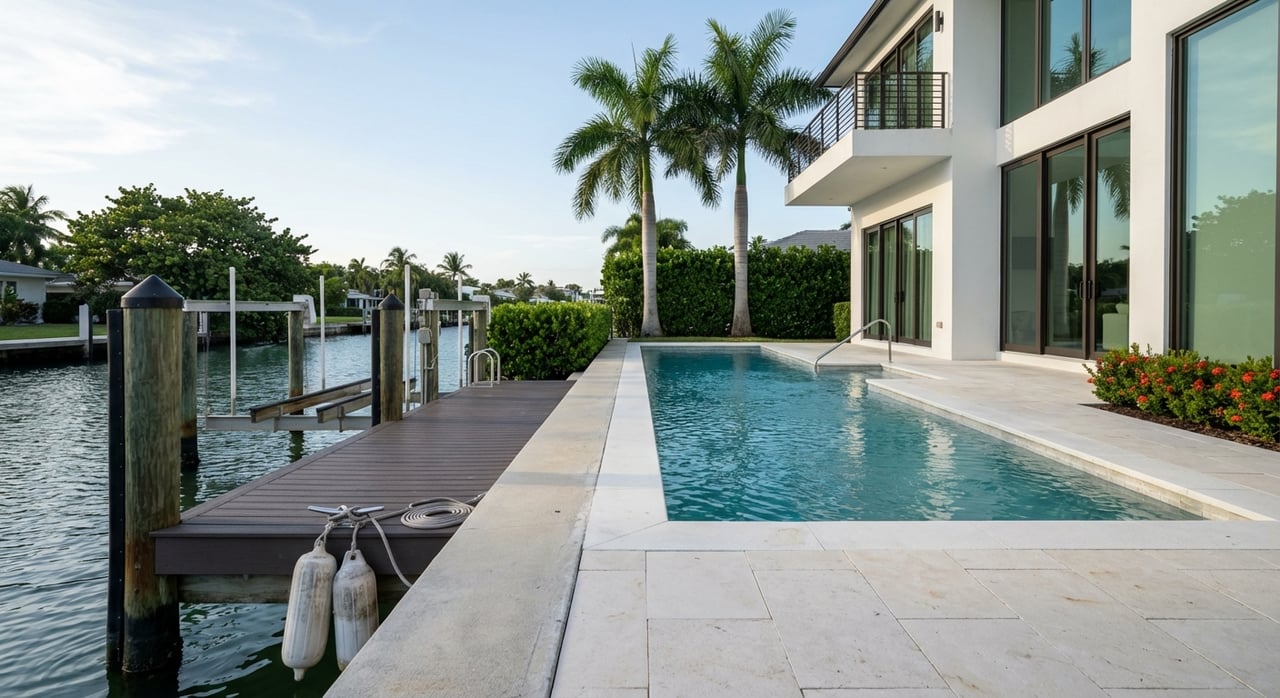
If you picture stepping from your patio onto a boat in Jupiter, you’re not alone. The views sell themselves, but the details beneath the surface are what make or break a great waterfront buy. In this guide, you’ll learn how to match a home to your boat, understand permits and insurance, and spot resale drivers that matter in Palm Beach County. Let’s dive in.
Know Jupiter’s waterways first
Jupiter connects the Atlantic Ocean, Jupiter Inlet, the Intracoastal Waterway, the Loxahatchee River and a web of residential canals. Each stretch of water has its own rules and constraints. Start with official maps and flood panels to understand the lay of the land and water.
- Use the Town’s maps to see parcel lines, flood layers and public data that inform due diligence. The town’s portal is a helpful launch point for research on a specific address through Jupiter GIS and maps.
- For boating routes, consult NOAA nautical charts for bridge clearances, channel depths and aids to navigation before assuming open-ocean access.
- The Jupiter Inlet is dynamic. Shoaling shifts with weather and seasons, and access can tighten for deeper-draft boats. The Jupiter Inlet District manages dredging and beach placement projects. Review their updates to see timing and locations of work at the Jupiter Inlet District dredging page.
Waterfront property types in Jupiter: what each means
Oceanfront or beachfront
These homes sit directly on the Atlantic side along A1A with immediate beach access. You get the most direct ocean exposure and the biggest wow factor. You also take on higher wind and flood exposure, plus more restrictive coastal setbacks and shoreline rules.
Inlet or riverfront
These properties face the inlet embayment or main Loxahatchee River channel. You often enjoy fast runs to the Gulf Stream, yet contend with stronger currents and active shoaling near the inlet. Stay aware of dredging cycles if quick ocean access is your priority.
Intracoastal and Sound-front
Homes along the AICW and Jupiter Sound sit on more protected water. Seawalls and private docks are common. Bridge schedules and vertical clearances shape your route planning to the ocean.
Canal-front
Man-made canals serve many subdivisions. Prices are often lower than direct ICW or inlet-front homes for similar living space. Canal depth, width and turning basins vary, and low fixed bridges or HOA rules can limit vessel size. Dock or lift rights may be deeded, assigned or leased. Verify exactly what conveys.
Marinas and dockominiums
Some buyers choose a home near the water and a separate marina slip for their vessel. Slip availability, size, and transfer rules are community or marina specific and can affect your lifestyle and resale. As a reference point, review slip details and ownership policies at Jupiter Yacht Club Marina.
Near-water homes
If you want the lifestyle without dock ownership, consider homes within walking distance of the water. You may gain lower insurance costs and easier maintenance, while keeping quick access to marinas and waterfront dining.
Boat access: clearances, depth and routes
You are buying the water as much as the house. Before you fall in love with a view, confirm your exact route from the property to the inlet.
Bridge clearances and schedules
Vertical clearance controls air draft for flybridge boats and sailboats. Drawbridge schedules can add timing constraints. As one local example, review the Donald Ross Road Bridge listing for published closed clearance and opening schedule. Apply the same approach to every bridge on your route.
Shoaling and dredging windows
Jupiter Inlet shoals naturally. Access can change with storms and seasons, then improve after maintenance dredging. Track local updates and advisories through the Jupiter Inlet District dredging page and regional coverage such as this hazard advisory for shallow water in Jupiter Inlet.
Do a low-tide test run
If you plan to keep a boat at home, arrange a low-tide test run with a local captain using your vessel or a similar size. This confirms under-keel clearance, turning room, and the reality of bridge operations. Local marinas and captains can help set these up; the team at Jupiter Yacht Club Marina is one starting point for local contacts.
Boat-fit checklist
Use this quick list before you make an offer:
- Max air draft on your route based on published bridge clearances and schedules.
- Draft at mean low water along the route and at the dock or slip.
- Turning basin width and any tight corners near the property.
- Slip dimensions, dock length and usable platform size.
Permits, seawalls and environmental rules
Docks, boatlifts, seawalls and dredging are regulated. Expect review by Florida DEP, the U.S. Army Corps of Engineers, Palm Beach County or the Town of Jupiter, and in some cases the Jupiter Inlet District. Work across seagrass, manatee zones or aquatic preserves can add conditions.
- For a plain-English overview of dock and shoreline permitting, read this summary of Florida DEP rules and exemptions. It explains common size limits for single-family docks and the “Consent of Use” process.
- New or replacement seawalls may require setbacks and can trigger local preferences for living-shoreline approaches. Confirm local code at the town and county level during due diligence.
What to pull from the seller
Ask the listing side for documentation up front. It protects you and helps you price risk.
- Copies of dock, seawall and lift permits, including as-builts and any engineer reports.
- Deed or title language that proves dock or slip rights, or explains any lease or easement.
- Recent survey and, if available, an Elevation Certificate.
- Any storm-damage history or repairs to marine structures.
Insurance, flood zones and long-term resilience
Flood insurance basics
If a property sits in a FEMA Special Flood Hazard Area and you use a federally regulated mortgage, flood insurance is required. Get quotes early and confirm the flood zone panel. FEMA’s portal explains the rules and how to read map changes at the Flood Map Service Center.
Elevation Certificates and LOMA
An Elevation Certificate from a licensed surveyor can lower premiums and sometimes support a Letter of Map Amendment if a structure is above the Base Flood Elevation. FEMA updated the certificate form in 2023, so make sure your surveyor uses the current version. You can read the update summary through the Association of State Floodplain Managers at Floods.org.
Wind and hurricane coverage
Coastal buyers face wind plus flood exposure. Premiums reflect roof age and shape, opening protection, tie-downs, and claim history. Your agent, insurer and inspection team should coordinate early so you understand options across NFIP and private markets.
Sea-level rise planning
Palm Beach County and local cities use regionally unified sea-level projections to guide infrastructure and adaptation. When you evaluate a home, separate near-term operational risks like king tides, storm surge and shoaling from longer-term planning horizons. For background, review the Southeast Florida Regional Climate Change Compact projections.
Insurance check: what to gather
- Current or recent Elevation Certificate and survey.
- Any existing flood and wind policy declarations for quote benchmarking.
- Wind-mitigation and four-point inspection reports if available.
- Flood zone panel ID used by the seller’s lender or insurer.
What drives resale on the water
Waterfront value in Jupiter often hinges on a few core factors. Focus on the ones future buyers will question.
- Deeded dock or slip rights. Deeded access is usually stronger than assigned or leased arrangements and often supports value. If a slip is in a marina, read transfer rules and size limits.
- Seawall condition. Walls are expensive to replace. Age, material and any prior repairs can change both price and insurance.
- Verified ocean access for your vessel. A mismatch between vessel and route is a common source of regret. Confirm bridge clearances and depth for your exact boat using official charts and published bridge data. The Donald Ross Road Bridge listing is a good example of how to review a crossing.
- Flood zone and elevation. These directly affect insurance and lending. Use FEMA’s Flood Map Service Center to understand map mechanics and documentation.
Buyer checklist for Jupiter waterfront
Use this list to structure your due diligence before you finalize a price.
- Deed or title language confirming dock or slip rights, or any easements or leases.
- All dock, lift and seawall permits with as-builts and engineer reports. Unpermitted structures are a red flag. See Florida DEP guidance at this permitting overview.
- Recent survey and an Elevation Certificate if available, plus the flood map panel used by the lender. Start with FEMA’s how-to portal.
- Depth at the dock and along the route at mean low water, plus any seagrass notes that affect docking.
- Bridge clearances and opening schedules along your route. Use published listings such as the Donald Ross Road Bridge for reference.
- Seawall age, type, condition and any repair bids, plus who maintains it if you are in an HOA.
- HOA or marina documents for vessel-size limits, slip assignment rules, transfer procedures and any special assessments.
- A planned low-tide test run with a local captain to verify turning room and under-keel clearance. Local marinas like Jupiter Yacht Club Marina can be a contact point.
- Records of storm damage or resilience projects that could change access or insurance costs.
- Current or recent updates on inlet shoaling or dredging. See the Jupiter Inlet District dredging page and regional advisories like this shoaling hazard note.
Quick summary
- Confirm recorded dock rights and verify permits for any marine structures.
- Check bridge clearances and channel depth for your specific vessel, not just “ocean access” in the listing.
- Order a current Elevation Certificate and get flood quotes early if the home is in a Special Flood Hazard Area.
- Ask for seawall inspections and any HOA or marina rules that could limit vessel size or slip transfer.
- Plan for near-term constraints like shoaling or bridge work, and understand long-term resilience planning in Palm Beach County.
When you are ready to explore Jupiter’s waterfront, you want a local, broker-led team that lives this due diligence from the first showing. We help you confirm boat-fit, permits and insurance early so your closing is smooth and your weekends are spent on the water, not in paperwork. To talk through your goals and get a tailored plan, connect with Jeremy Blum. Schedule a Consultation.
FAQs
What should I check first when buying a waterfront home in Jupiter?
- Start with flood maps, bridge clearances and inlet conditions. Use Jupiter GIS and maps, NOAA charts and the Jupiter Inlet District dredging page to frame access and risk.
How do I verify bridge clearance for my boat from a Jupiter canal to the ocean?
- Trace your route on NOAA charts and check each bridge’s published listing. As an example, review the Donald Ross Road Bridge details for how clearance and openings are posted.
What permits are needed to add or modify a dock in Jupiter?
- Expect review by Florida DEP, the U.S. Army Corps of Engineers and local agencies. Start with this Florida DEP permitting overview to understand common limits for single-family docks and when exemptions apply.
Do I need flood insurance for a Jupiter waterfront property?
- If the home is in a FEMA Special Flood Hazard Area and you use a federally regulated mortgage, flood insurance is required. Learn more at FEMA’s Flood Map Service Center.
How can I keep a larger boat if my home’s canal is shallow?
- Pair the house with a marina slip sized for your vessel. Review availability and ownership or lease options at locations like Jupiter Yacht Club Marina, and confirm transfer rules and slip dimensions before you buy.